


Insurance Does Not Need More AI Pilots
The next phase of transformation will be won by insurers that connect intelligence to the work, decisions and systems that move the business. Insurance has no shortage of artificial...

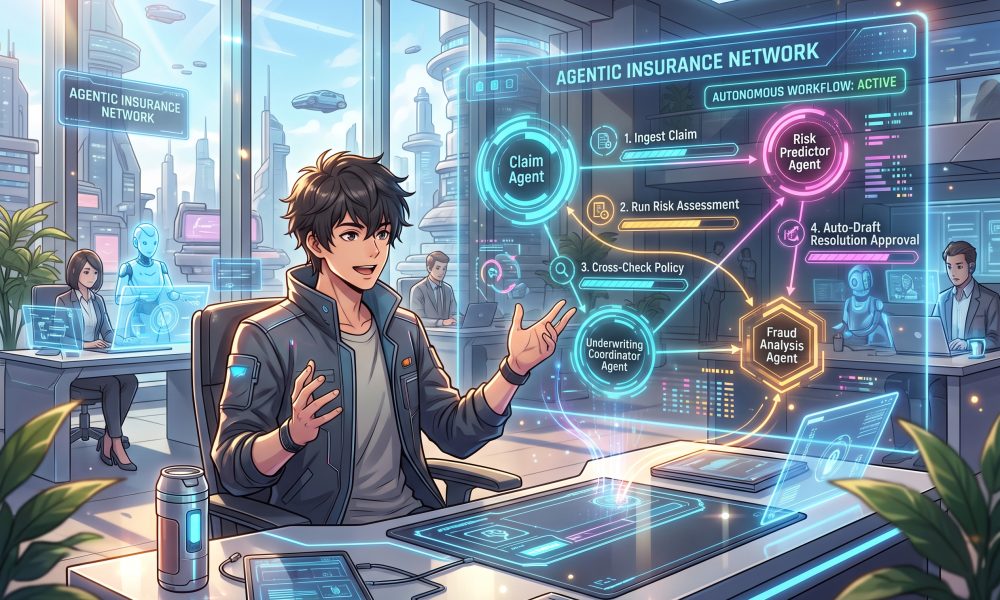
The next phase of transformation will be won by insurers that connect intelligence to the work, decisions and systems that move the business.
Insurance has no shortage of artificial intelligence. Carriers are using it to extract data from documents, score risks, flag unusual claims, summarize files and recommend next actions. Yet many leaders are confronting an uncomfortable reality: more AI does not automatically create a more modern insurer.
The reason is simple. Most early AI initiatives have improved individual tasks without changing the operating model around them. A document may be read faster, but the output still has to be copied into another system. A risk may be scored instantly, but the underwriter or adjuster still has to reconstruct the full picture from disconnected sources. A recommendation may be accurate, but the deadline, approval and audit trail still sit somewhere else.
The constraint is no longer access to intelligence. It is the ability to connect intelligence to action.
FPT is tackling the challenge by bringing agentic AI into a connected claims platform, where specialist agents can assemble evidence, identify missing information, support coverage and fraud checks, and coordinate the next action around a shared view of the claim. The aim is to move beyond faster individual tasks toward a claims journey with fewer disconnected handoffs, clearer accountability and more time for adjusters to exercise judgment. Connecting that capability to existing systems, with explicit human approvals and an auditable record of actions, is what creates a practical path from AI experimentation to operational improvement.
Why task automation reaches a ceiling
For years, insurers have modernized around the edges of core platforms. They added portals, workflow tools, robotic automation, data lakes and point solutions. Each delivered value, but each also became another component that had to be coordinated across a complex estate.
Generative and agentic AI can become another layer in that stack unless insurers approach it differently. The real opportunity is not a collection of clever assistants. It is a connected operating model in which data, AI, workflows and people work from the same context.
That context must span the insurance value chain: distribution signals and partner data; underwriting submissions and appetite; policy and core records; claim documents, notes and images; and the customer and agent interactions that surround every transaction. When that information remains fragmented, even strong models produce isolated moments of efficiency rather than end-to-end improvement.
Modernization without waiting for core replacement
This does not mean every insurer must begin with a multi-year core replacement. In fact, waiting for a perfect future-state architecture can delay the operational gains the business needs now.
A more practical approach is progressive modernization: use APIs, cloud services, data products, intelligent document processing and orchestration to create a modern layer around the systems already running the business. That layer can bring information together, apply specialist intelligence and coordinate work while preserving the core platforms that remain fit for purpose.
The design principle matters. AI should not sit beside the process as a separate destination. It should be embedded within the process, with clear triggers, permissions, decision rights and handoffs. People remain responsible for consequential decisions; AI prepares the evidence, monitors the work and makes the next best action easier to take.
Five questions for the next AI investment
Before approving another pilot, insurance leaders should ask whether the initiative can answer five operating questions:
- What complete business outcome will improve, rather than which isolated task will become faster?
- Can the solution reach the data and documents required to understand the work in context?
- How will it connect with existing policy, claims, underwriting and customer systems?
- Where will human judgment remain explicit, and how will approvals and rationale be recorded?
- Can the model move from a controlled demonstration to secure, governed production at scale?
These questions shift the conversation from model capability to operational capability. They also expose why engineering, integration, governance and insurance expertise have to advance together. A highly capable model cannot compensate for an incomplete claim file, a broken handoff or an unclear decision authority.
Start where outcomes are visible
The best starting point is not necessarily the easiest use case. It is the process where disconnected work is most visible, the cost of delay is meaningful and progress can be measured. For many insurers, that process is claims.
Claims concentrates nearly every modernization challenge in one journey: unstructured documents, images and notes; policy and coverage data; fraud, severity and liability assessment; regulatory deadlines; customer communication; payments; recovery; and human judgment under pressure. It is also where operational improvement becomes tangible to customers and employees.
That makes claims more than a cost-reduction opportunity. It can become the proving ground for a broader agentic operating model – one that sees the work, reasons across the available context, coordinates action and learns from outcomes.